It’s been to cold for me to work in the shop, so I’ve been spending most of my free time on the computer. One of the projects I’ve been working on is wall charts for the shop. When working on projects, I’m forever running back into the house to look up a speed/feed, or the hole size for a given tap. Hopefully having clearly laid out charts will cut down on the number of trips inside.
I know I’m not the only one who suffers from this problem, so in the spirit of Christmas, I have uploaded some of the finished charts here in PDF format:
- drill size chart with decimal & mm equivalent
- Unified tap hole sizes for thread engagement 0f 50% – 80% in 5% steps
- Metric tap hole sizes for thread engagement 0f 50% – 80% in 5% steps
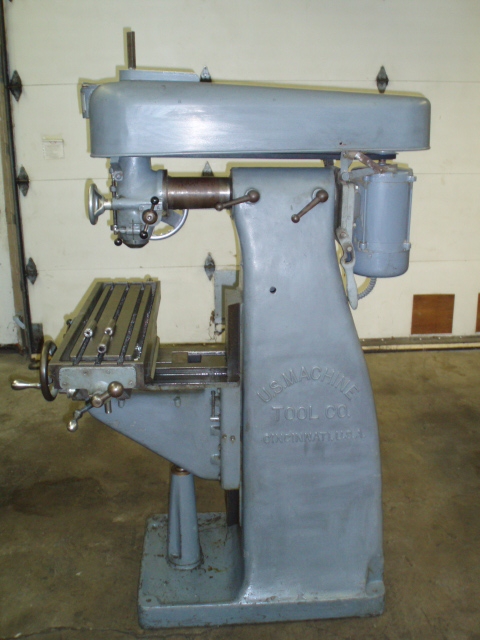
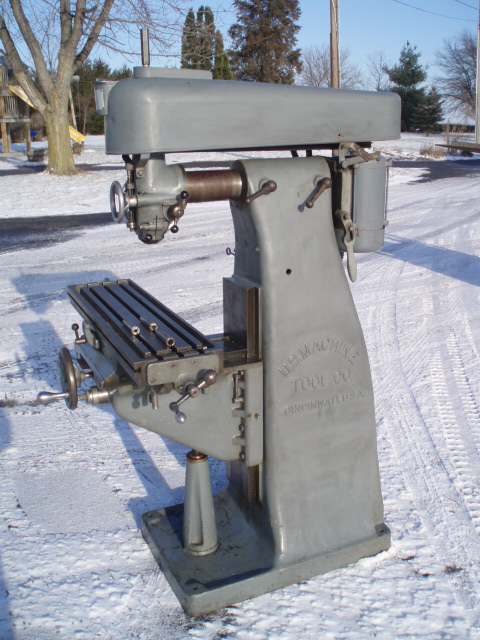
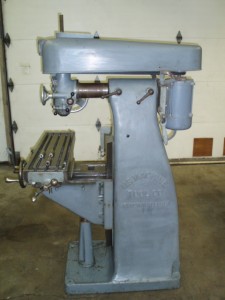
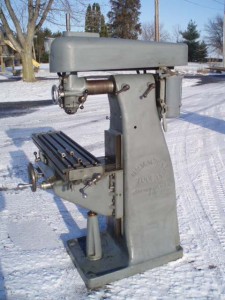
After two years of watching my local tool dealers website, A mill finally popped up that meets all my needs. Thus for $525 I picked it up, it’s a U.S. Machine tool Company V2 vertical mill. The mill is about 2/3 the size of a Bridgeport weighing in at 1800 + lbs, and has a 9-5/8″ x 36″ table. I pulled the following tidbit of info off the net, that some might find interesting.
The United States Machine Tool Co. was founded in Cincinnati, Ohio in 1915. It became the US Machine Tool division of Ransohoff Co. in 1947. In 1948, it merged with Burke Machine Tool and became US Burke Machine Tool Co. In the 70s, US Burke became part of Powermatic/Houdaille and the Cincinnati facility closed sometime in the early to mid 80s.
The Dealer initially didn’t have any photos of the mill on his website, but after sending of an email request, I received the following two photos.
Continue Reading…
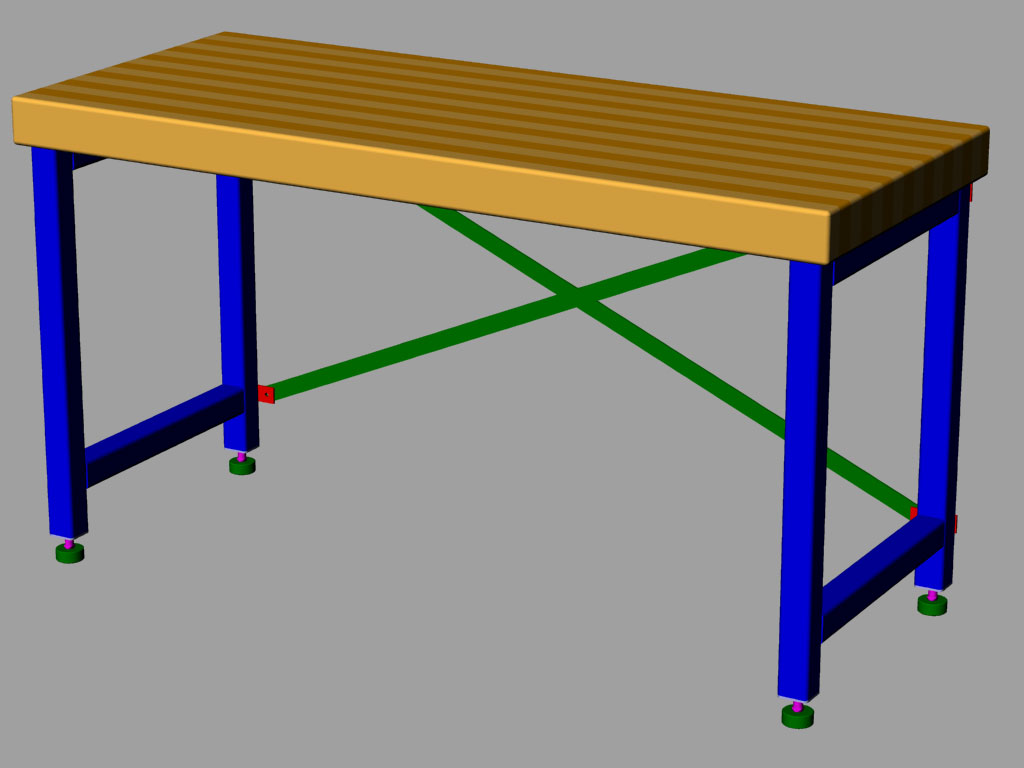
It’s been a while since I posted something so I thought I should share what I’m currently working on. Besides, it’s to cold in the garage to work even with the propane heater running full blast. I’m Making 2 utility benches for my workshop. I want them to last “forever”, so I have over engineered everything. My design requirements where:
- They must be open underneath for role away tool storage.
- They must be easy to disassemble if/when I move.
- They must be able to support a high static load, in case I want to mount machine tools to them. I chose 1000 pounds as the target load.
It took me awhile to finalize the design, but what I came up with should be easy to build and not cost to much. The overall dimensions are W 72”, D 30”, H 40”– 44” (adjustable). I plan to make the top 4″ thick out of laminated hard maple. I might make it thinner depending on how much maple costs per board foot when I go to purchase it. The legs & horizontal cross bracings are 2.5” x .12” square tubing, & the rear diagonal bracing is 1-1/2” x 3/16” flat bar bolted to the legs.
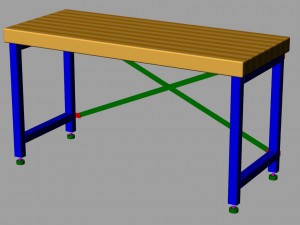
I’ll post some more pics in a day or two.
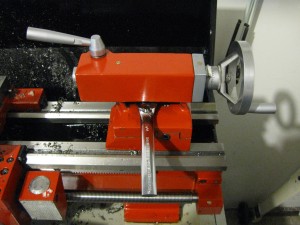
I recently made a cross-slide lock for my lathe. Half way through the project I found out I needed to replace the carriage lock because it was interfering with the cross-slide lock. My lathe originally had a simple setup: an M8 socket head cap screw in the carriage pulled a cast iron block up against the front way when tightened. This worked fine initially, but I quickly tired of digging through swaf to find the proper Allen key.
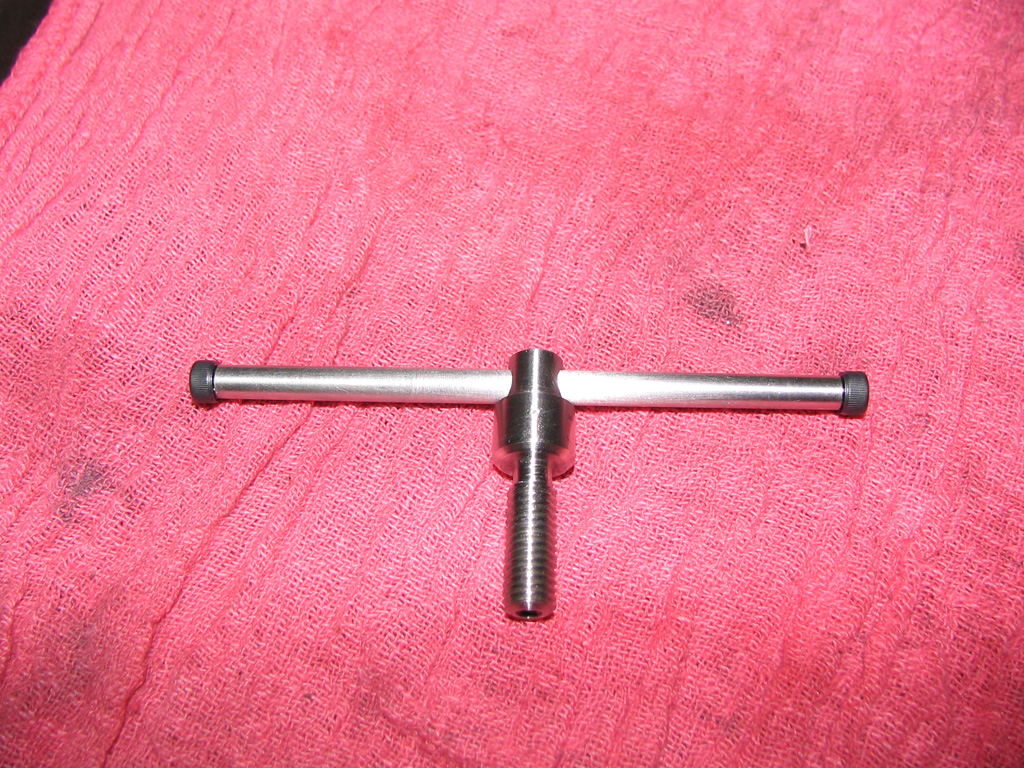
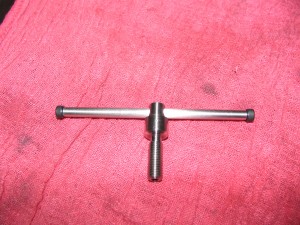
Below is the second version of my locking screw( the first one worked, but isn’t as pretty). The clamping bolt is essentially a stainless M8 bolt with a custom head. The handle is a section of stainless turned to a diameter of 5.5mm and then tapped on each end for a M4 socket head cap screw. Since the heads of the screws are slightly larger than the hole in the clamping bolt, the handle can slide from side to side without falling out.
After a recent project that required a lot of drilling, I decided I needed a better way of locking my tailstock in place. When I purchased my lathe it came with a 19mm wrench for locking the tailstock. It worked fine for occasional use, but was a pain when you needed to move the tailstock a lot. I considered making a cam lock tailstock, but they can’t provide the clamping force a wrench can.
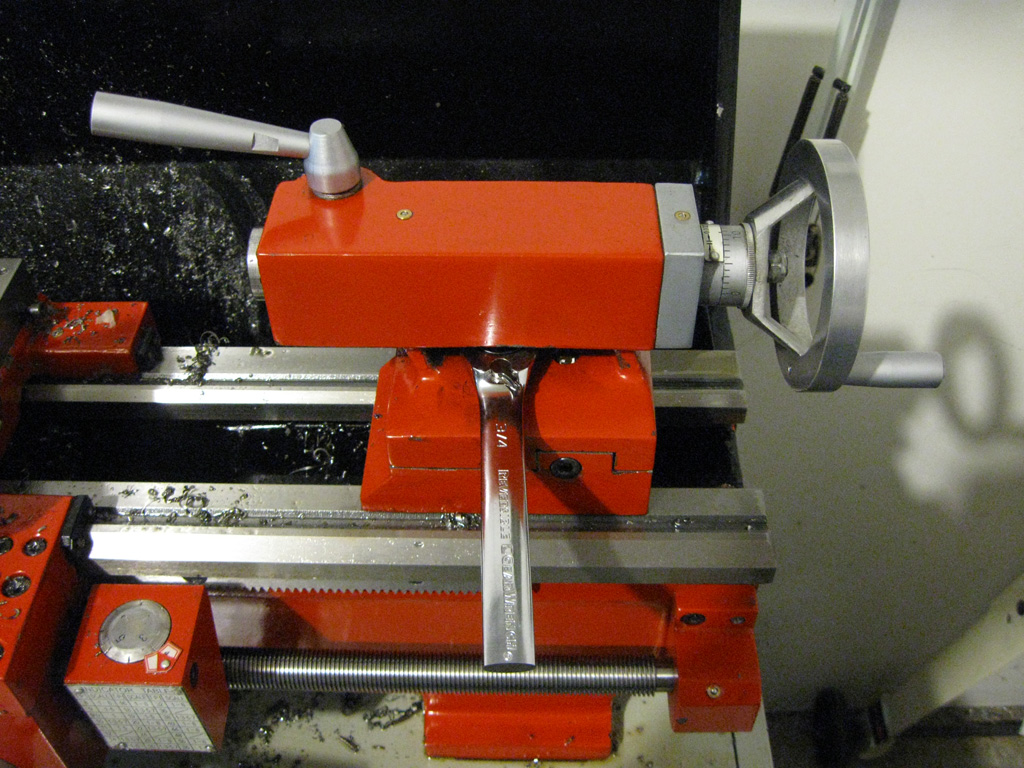
Below is the solution I came up with, it’s a shortened 19mm reversible ratchet wrench. It’s as quick and easy to use as a cam lock mechanism, with the added benefit of producing a lot more torque. A short stiff spring between the base casting and the locking plate insures enough tension on the bolt to make the ratchet actuate.