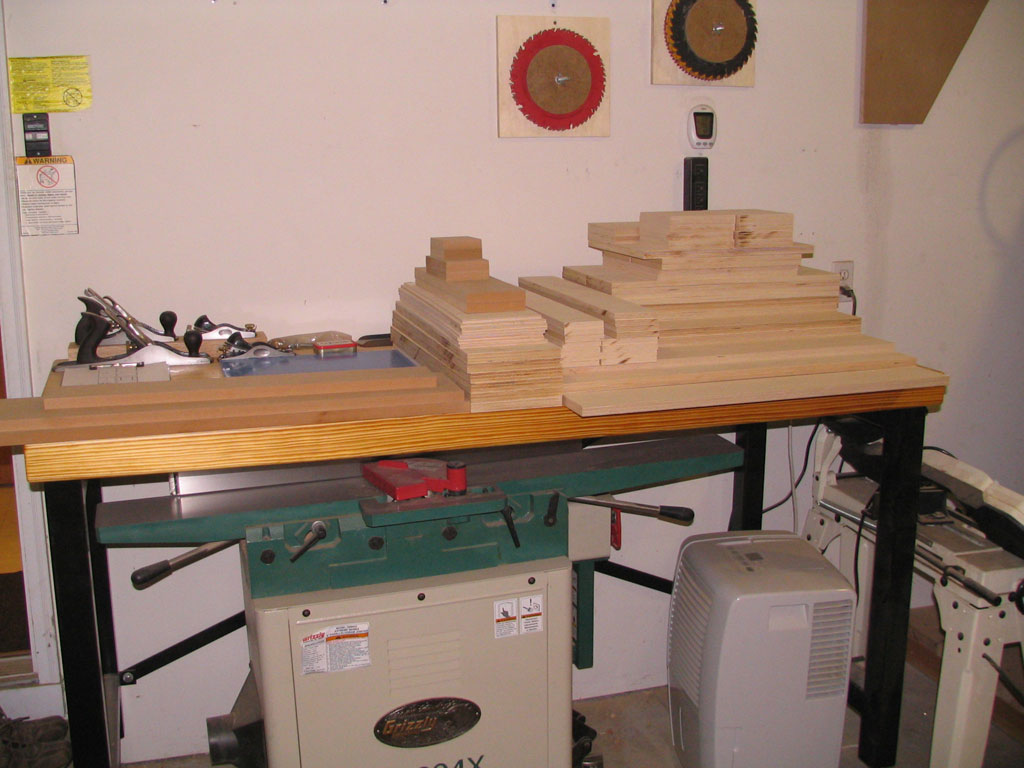
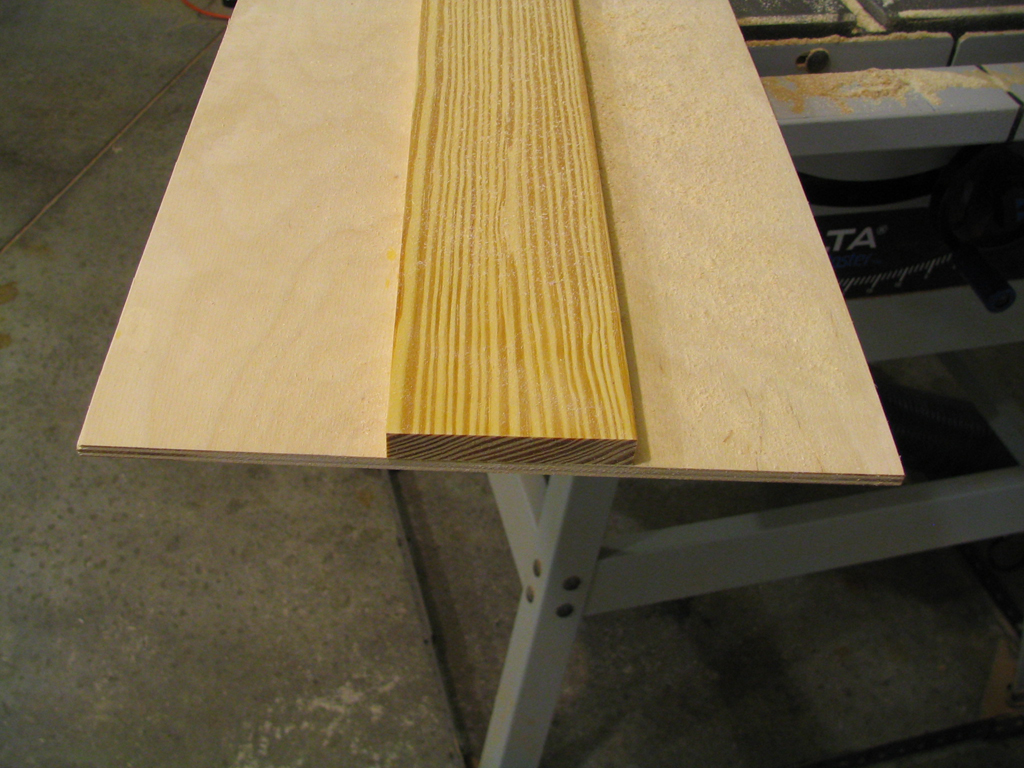
The cold snap we had here last week, brought this project to a dead stop for a few days. Thankfully the mercury has climbed above freezing again, and I was able to finish rough cutting everything to size last night except for the cabinet sides. As soon as the local wood shop gets the 3/4″ plywood in I ordered (I need it for the cabinet sides), I’ll start assembling the carcass. In the mean time, I’m going to check if my table saw is out of alignment, because I got a significant amount of burning on rip cuts last night. This usually indicates that the blade is no longer parallel to the miter slots.
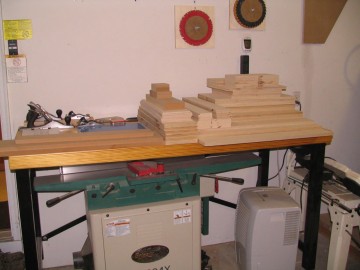
Five sheets of plywood really doesn't look like much after you cut it up.
I’m not really sure why, but I have been putting off making one of these for years. Making a cross cut sled is easy, but getting the fence square can be a real PITA (Oh yea that’s why). This sled is a smaller (42″ x 42″), simpler version of the Ultimate Crosscut Sled presented by John McCormack in the July 2008 issue of Fine Woodworking. The actual dimensions of a sled are so dependent on your particular saw and project needs, that it’s pointless for me to draw a plan in sketchup for you to download. The following are some things to consider before making your sled.
Continue Reading…
It seems like every other month or so, someone asks about Baltic Birch plywood on one of the forums I frequent. I think one of reasons so many questions exist, is because there isn’t much information on the net. The following is a basic primer on Baltic Birch plywood, generated from various internet sources I’ve come across.
Region of origin – As the name implies, Baltic Birch plywood is produced from Birch trees from the Baltic region of Europe. The two main producers appear to be Russia & Finland.
Thickness – True Baltic Birch plywood only comes in metric thicknesses. The most common sizes found in North America are 6mm, 12mm, & 18mm. Additionally 3mm, 9mm, 15mm, & 25mm can occasionally be found in a narrower range of grades.
Size – You used to only be able to find Baltic Birch plywood in 5’x5′ sheets. Recently people have reported finding 4’x8′ sheets. Supposedly Manufactures have become wise to the fact that plywood comes in 4’x8′ sheets in North America, and have started producing to that size.
Continue Reading…
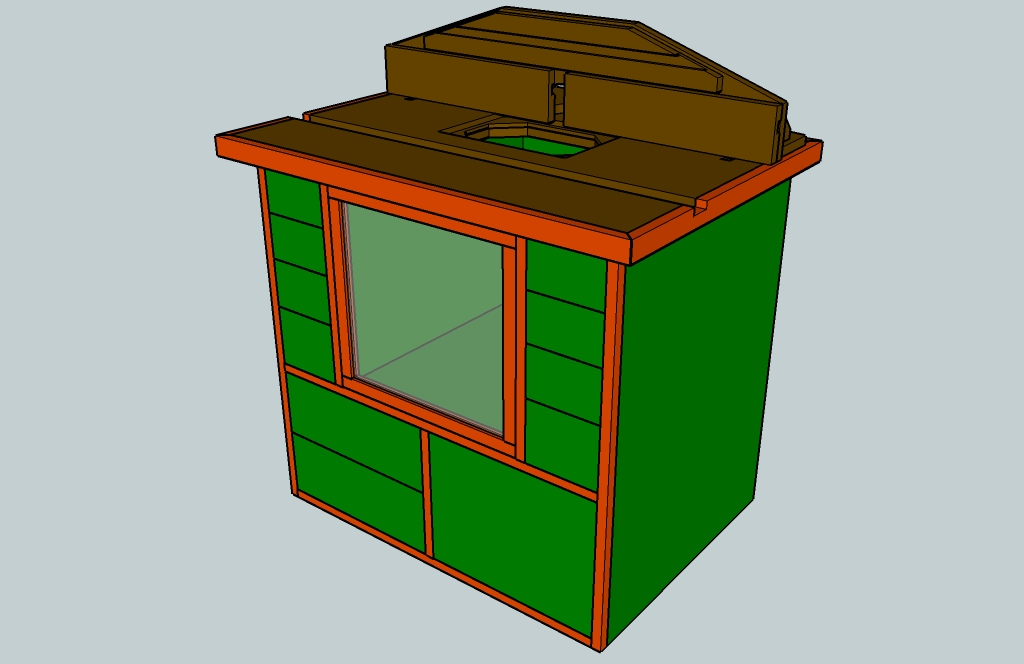
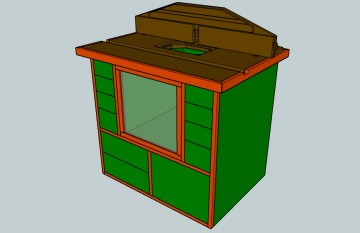
It’s been really cold outside and in the shop so I haven’t made much progress on the router table, other than rough cutting a few of the major components to size. Since my Bench dog lift arrived on Monday, I was able to get dimensions off of it, so I could complete the table design (seen below). I think I might need to add some bracing under the top to support the lift, as it’s a lot heavier than I expected (22 lbs. without the router mounted).
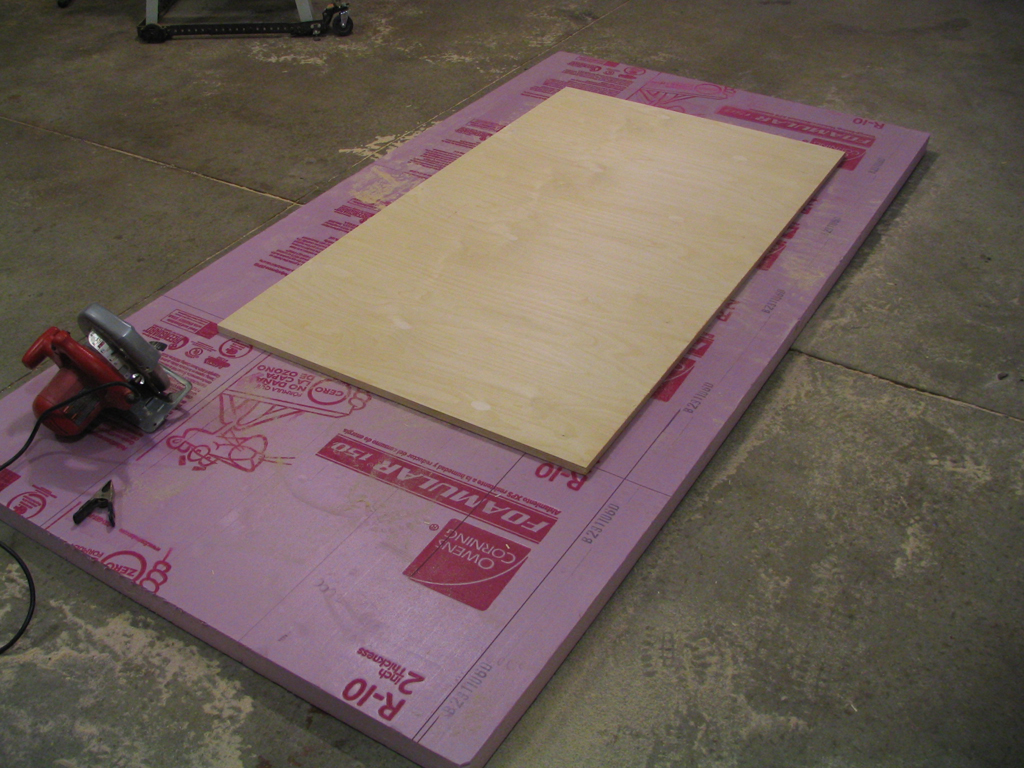
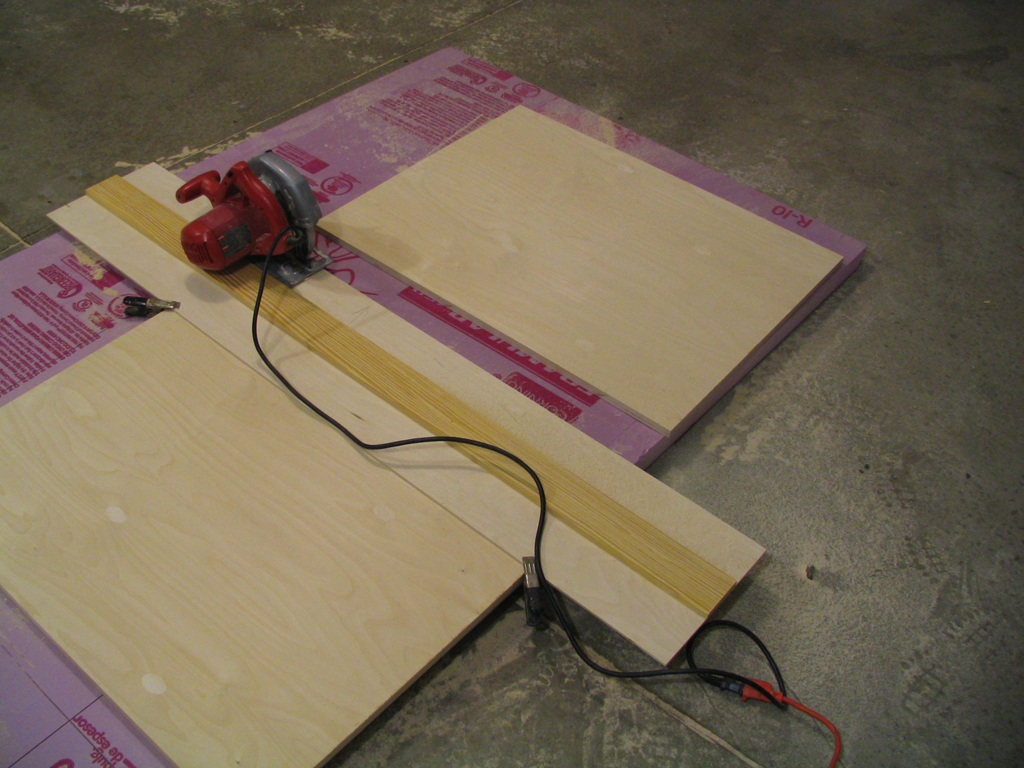
The easiest way to breakdown plywood and other sheet goods is with a “track saw”. No I’m not talking about the ones sold by Festool & DeWALT that cost as much as a contractors saw. I’m talking about the ones that cost nothing because they are made from scrap. Pictured below is the one I’m using to rough cut the panels of my router table to size. It’s made from 1/4″ Russian birch plywood, & a SYP 2×4. The only step in making one that is remotely difficult is jointing the edge of the 2×4.
A 4'x8' sheet of 2" thick pink insulation makes an excellent sacrificial cutting surface.
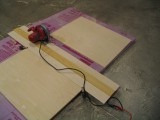
The plywood edge prevents tear out, & makes lining up cuts a cinch.
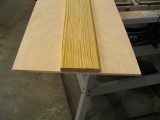
Keep the guide board thin, so it doesn't hamper your abillity to make deep cuts.